

Authorize every action. Don’t just watch it
Agents act in your environment with authority no one scoped. Highflame gives every agent a verifiable identity and decides, inline, whether each action is allowed, instead of alerting after the fact.
Agents act with authority no one scoped, attributed, or enforced
Most agent-security tools observe and alert. By the time a monitor flags drift, the action already happened.
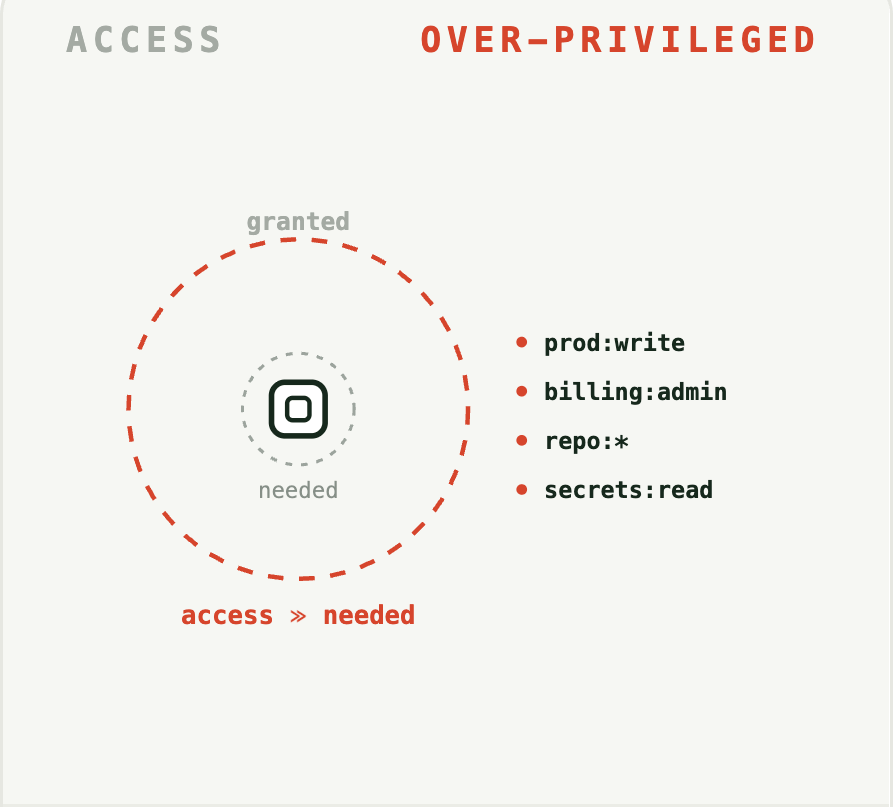
Agents inherit too much trust
Shared keys, service accounts, developer tokens: no least-privilege model, no expiry, no context-aware scope.
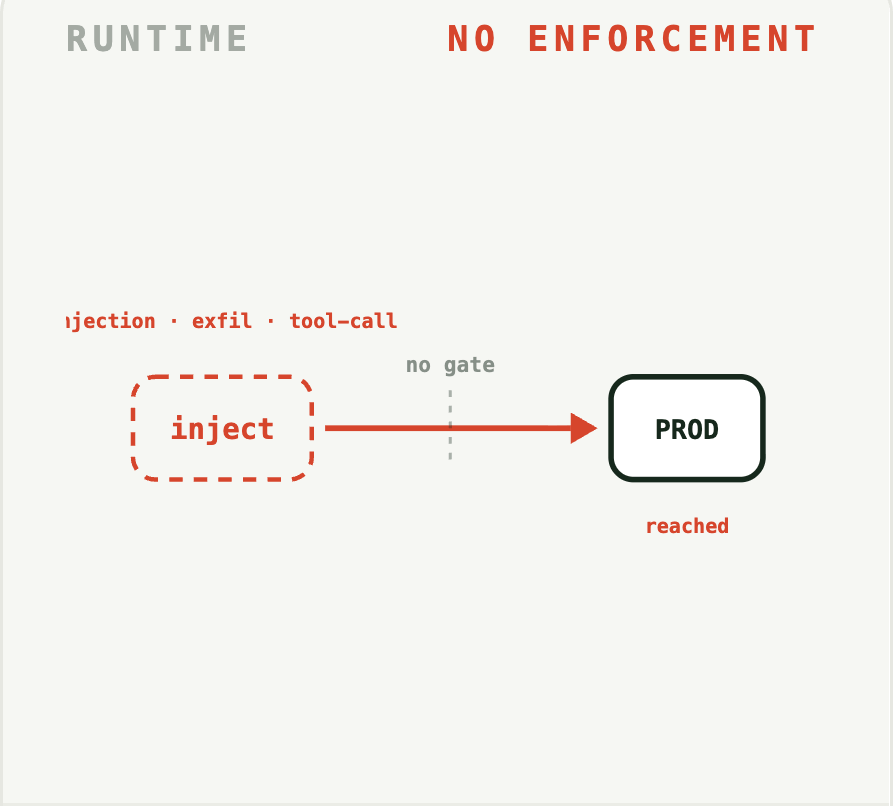
Attacks reach production
Prompt injection, data exfiltration, and unsafe tool calls are live exploitation paths. And most stacks have no inline enforcement.
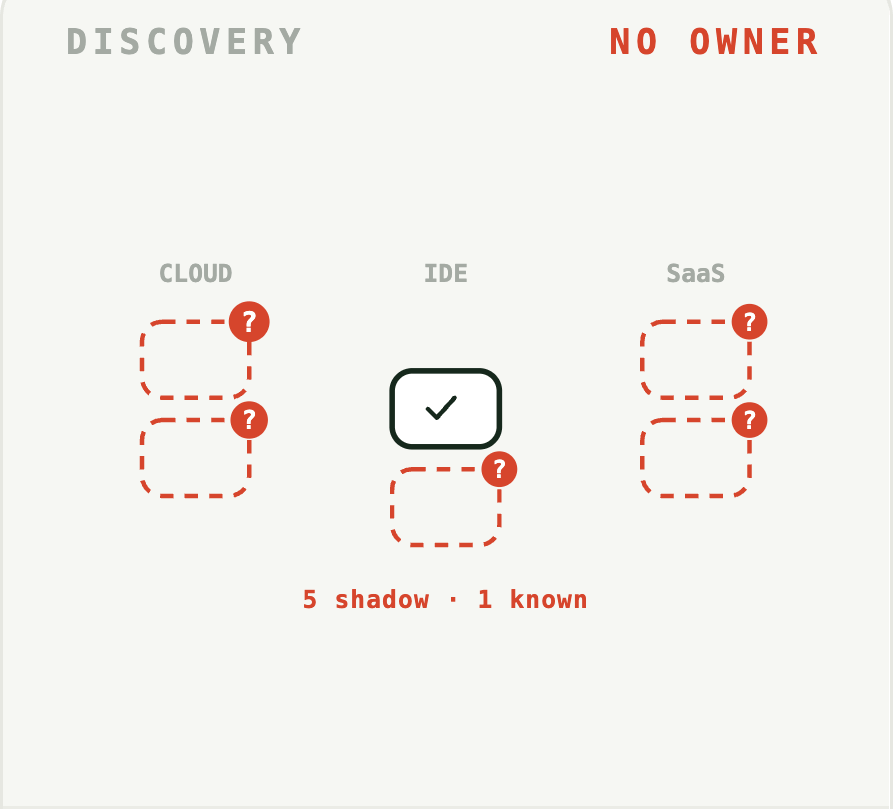
You can’t see what’s acting
Shadow agents spread across clouds, IDEs, and SaaS with no inventory and no named owner.
Identity, authorization, and enforcement as one substrate
Highflame decides whether each action is allowed before it lands. At every boundary an agent crosses.
Verifiable identity for every agent
Every agent, bot, and integration gets a credential tied to a named human owner: built or bought.
Inline authorization, every boundary
Agent actions, IDE actions, and model/A2A/MCP calls are checked against one policy engine before they execute.
Signal engine + adaptive guardrails
Hundreds of signals on every agent run, scored against a guardrail layer that tightens as new patterns appear.
Continuous red teaming
Adversarial scans turn findings into enforcement policy, then re-scan to prove the fix. Mapped to OWASP, NIST, and MITRE.
Make unauthorized actions a non-event
Decide, don’t just detect
Define-then-permit, not anomaly alerts after the breach.
Contain blast radius in seconds
Cascade revocation across the fleet; mission drift contained before it lands.
One policy, every application
Set centrally; every agent and app inherits it, including next quarter’s.
From unmanaged agents to governed access
- Discovery of every agent across clouds, IDEs, and SaaS: including shadow seats
- Unauthorized actions blocked before they execute, not flagged after
- Real-time cascade revocation across the entire fleet
- Continuous adversarial scanning mapped to OWASP · NIST · MITRE
- Every action attributed to the agent and its human owner
Security FAQ
How is this different from a monitor or EDR for AI?
Monitors watch agents drift and alert you after. Highflame authorizes each action inline and enforces. Observation is downstream of the decision, not a substitute for it.
Does it replace my AI gateway?
No. We integrate with any AI proxy or gateway and add per-action authorization keyed to the agent’s identity.
What about agents we didn’t build?
Trust tiers gate what marketplace and bought agents are eligible for, and a lower tier means tighter policy. Either way every action is still authorized per request, so there is no implicit trust.
What’s the latency?
Cedar policy decisions evaluate out-of-band in under 1 ms; detection runs in under 10 ms.
See it against your actual threat surface.
A 45-minute session covers your agent inventory, the highest-risk gaps, and how authorization lands inline in your environment.